
Open, citizen-built sky survey

A cluster of smart telescopes,
watching the whole sky move.

The Smart Sky Survey links several compact smart telescopes into one array that tiles a region of sky all night long — rebuilding the same mosaic on a configurable cadence (about once an hour, by default) so that anything that moves, brightens, or appears can be caught in the act.

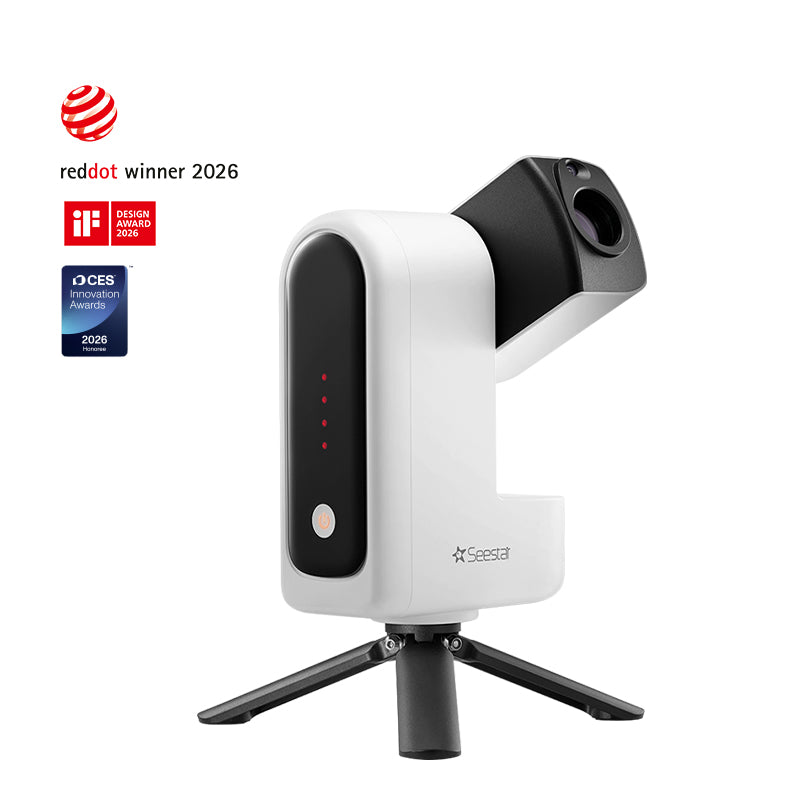
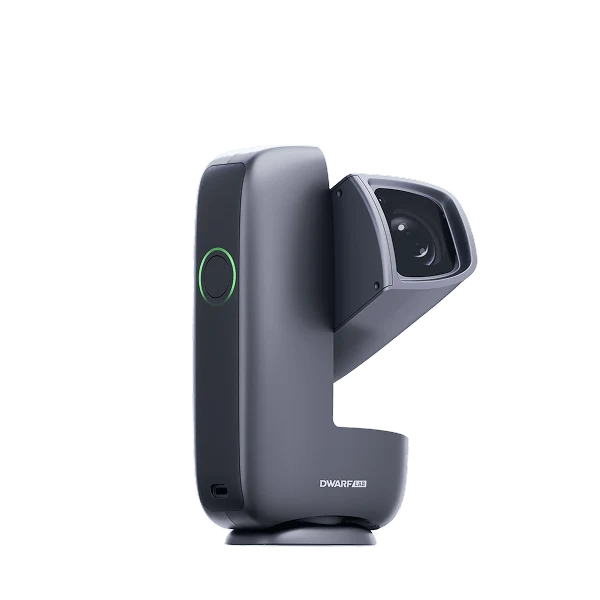
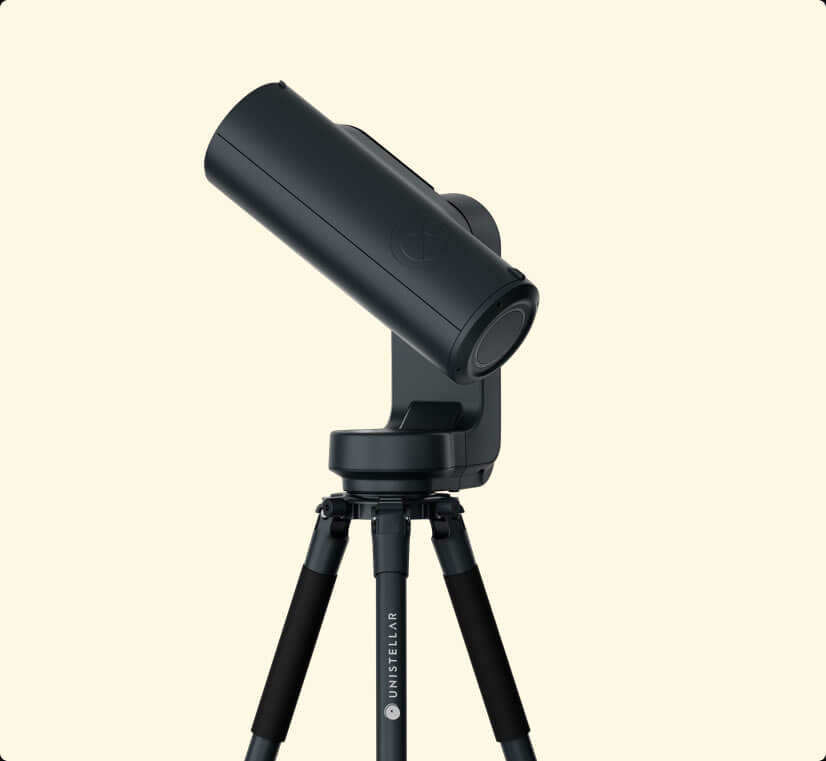
ZWO Seestar S30 Pro smart telescope, official product photo DWARFLAB DWARF mini smart telescope, official product photo Vaonis Vespera 3 smart telescope, official product photo Unistellar Odyssey smart telescope, official product photo

Photos courtesy of ZWO / seestar.com, DWARFLAB / dwarflab.com, Vaonis / vaonis.com, and Unistellar / unistellar.com — smart telescope platforms this project is aiming to support.

~1 hr defaultconfigurable revisit cadence per tile
5–10 minstacked exposure per tile
N×Mscalable telescope array
EQ + ASCOMfully scriptable control
The Idea

One big patch of sky, rebuilt on your schedule

Small telescopes, used together, can do something a single big telescope can't do easily: watch a wide area repeatedly, all night, without moving between completely different targets.

🔭

Array, not a single scope

Several smart telescopes point at neighboring, slightly overlapping patches of sky at the same time — together they cover one large contiguous field, like tiles in a mosaic.

🕐

Stack, slew, repeat

Each patch is exposed and stacked for 5–10 minutes. Then the whole array slews together to the next patch — tiling across the target region and looping back on a configurable cadence, about once an hour by default.

✨

Catch what moves

Because every patch gets revisited on that same cadence all night, asteroids, comets, satellites and transients reveal themselves by shifting or appearing between passes — or, with a longer loop, the survey trades that time series for a single wider pass across more sky.

How It Works

Two grids, one array

There are two levels of tiling at play: the fixed arrangement of telescopes within the array, and the sequence of sky positions the whole array steps through over the night.

Array arrangement diagram, a 3 by 2 grid of overlapping telescope fields of view Scope 1 Scope 2 Scope 3 Scope 4 Scope 5 Scope 6 Inner grid — fixed array layout (example: 3×2) Overlap between neighboring fields of view accounts for pointing error and alignment margin
Each telescope's field of view is offset from its neighbors by (FOV × (1 − overlap)), in both RA and Dec, so the array's combined footprint tiles cleanly.
Outer grid diagram: the whole telescope array steps through a grid of slightly overlapping sky tiles, each tile being one pointing of the full array, then loops back to the first tile Outer grid — the whole array moves from tile to tile (example: 5×3 tiles) IMAGING SLEWING 1 2 3 4 5 6 7 8 9 10 11 12 13 14 15 after the loop length (~1 hour by default): back to tile 1 — every patch is revisited on that cadence, all night = one outer tile (amber): one pointing of the whole array — neighbouring tiles overlap slightly
Outer grid — every tile is one pointing of the complete array, and neighbouring tiles overlap slightly so no sky falls between them. The array works through the tiles in a serpentine path, then loops back to tile 1, producing a "mosaic of mosaics" on a configurable revisit cadence (~1 hour by default).

Catching what moves

Because the array revisits every tile on each loop, each patch of sky builds up a time series over the night.

Time series — the same sky tile, imaged once per loop over six hours

time
Every loop images the same patch of sky again. Stacked on top of each other, the fixed stars line up perfectly — anything that changed position between frames, like an asteroid or comet, stands out as a moving dot.
Choose your loop length

One dial, four kinds of survey

The loop length — how long the array takes to step through the outer grid before looping back — is a configurable planning choice, not a fixed property of the system. It trades sky coverage against revisit cadence. Try it yourself in the survey simulator.

Use case Loop length Time-series images / tile / night Sky area surveyed
Full-sky survey One loop per night (no revisit) 1 — no time series Maximum — the whole night, none of it spent revisiting
Wide-field survey 90–120 min Few (2–4) Large — more tiles fit per (longer) loop
Standard survey (default) ~60 min Moderate (≈4–8) Balanced — the original "mosaic of mosaics" cadence
Narrow-field / fast-cadence survey Short (15–30 min) Many (8–20+) Small — fewer tiles fit per (shorter) loop

A night, step by step

  1. Startup & alignment

    Every telescope is leveled, polar-aligned for EQ tracking, and connected over ASCOM/Alpaca to the control host.

  2. Load the night's tile plan

    A precomputed list of sky tiles — generated from the target region, array arrangement, and field of view — is loaded and filtered for the night's twilight window and altitude limits.

  3. Slew as one array

    The control host sends each telescope its own goto coordinate — offset from the array's shared center — so all scopes point at their tile of the current mosaic simultaneously.

  4. Expose & stack

    Each scope exposes and stacks for 5–10 minutes, then the stacked frame is saved with a name that records the scope, tile, and cycle it belongs to.

  5. Move to the next tile — and loop

    The array advances to the next tile in the plan. After the last tile, it loops back to the first, so the whole region gets revisited on the configured loop length (~1 hour by default) until dawn.

👀 See the web UI in action

Curious what actually running and monitoring a session would look like day to day? Click through a full project/session/telescope workflow — including a simulated session running live — built entirely as a showcase for contributors and supporters, with no backend behind it.

Open the web UI mockup
Technology

Built on open, scriptable astronomy tools

Every part of the array is controlled and coordinated in software, so the system scales from a couple of telescopes to a much larger array.

🧭 Equatorial (EQ) mounting

Smart telescopes that support EQ mode use it for multi-minute stacks, eliminating field rotation and keeping frame orientation consistent from tile to tile and night to night. Alt-az mode is supported too, with the limitations field rotation imposes on longer stacks.

🔌 Option A — ASCOM / Alpaca control

Telescopes are driven through ASCOM Alpaca — an IP-based, scriptable standard — rather than the stock mobile app, so goto, exposure, and status can be orchestrated across the whole array from one place. Best for locally-owned, locally-networked units.

🤝 Option B — Native remote control & "rent-a-scope"

ZWO's own app supports remote control and time-limited device sharing between accounts — so a telescope owner anywhere can lend the project their Seestar for a night. This lowers the barrier to a bigger array: no hardware to buy, no local network to join, just a shared session for the night.

🗺️ Tiling & planning engine

A coordinate-math tool computes per-telescope and per-tile RA/Dec targets from field of view, overlap percentage, and array arrangement (2×2, 3×2, and beyond), and builds the full night's tile plan in advance.

🗂️ Structured data pipeline

Every stacked frame is named and indexed by telescope, sky tile, and cycle — so images can be automatically grouped into time series for detection, or mosaicked into a full picture of the surveyed region.

Data & Science

From raw frames to discoveries

The configurable revisit cadence is what makes the survey scientifically flexible — the same processing pipeline that builds a mosaic can also spot what changed between visits, when the chosen loop length produces a time series.

StageWhat happensWhy it matters
Per-tile stackingSub-exposures for each 5–10 minute block are combined into one clean frame.Removes noise, boosts faint signal for each patch.
Time-series alignmentAll visits of the same tile, at the configured loop cadence, are astrometrically registered to a common frame.Makes frames directly comparable, cycle to cycle.
Blink / difference detectionSequential frames are compared to flag anything that shifted or appeared.Surfaces asteroid, comet, and transient candidates automatically.
Candidate vettingDetections are cross-matched against known object catalogs.Separates already-known objects from genuinely new finds.
Mosaic assemblyAll tiles from one pass are combined into a single wide-field image.Gives a full-region view of the sky and validates the tiling itself.
Partners

Supported by

Smart Sky Survey is an independent, non-commercial project — and it doesn't grow alone. These partners help turn the idea into a working array.

Confirmed partner

DWARFLAB

Maker of the DWARF smart telescopes

DWARFLAB supports the project with DWARF telescopes for the array and with technical help on device integration and remote control — a key step toward a survey that works across telescope brands.

  • ◆Telescope hardware
  • ◆Technical & API support
dwarflab.com ↗
Support

Help the survey grow

Via PayPal, with a virtual coffee, with a DWARF mini at a partner discount — or by lending a telescope: every contribution brings more sky into view.

Interested in the project?

Whether you'd like to follow along, contribute a telescope, or explore a partnership — we'd like to hear from you.